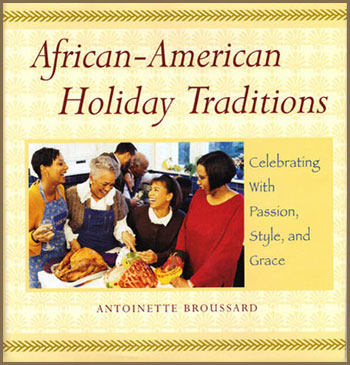

Antoinette has authored a book about traditions and entertaining that would pay homage to her African American culture and the numerous ethnicities it melded with. African American Holiday Traditions: Celebrating with Passion, Style, and Grace, was published by Citadel Press (2000), and its paperback edition (2004). The book was an opportunity to acknowledge the importance of traditions in shaping families and who we are. More than sixty distinguished contributors including actresses Kimberly Elise and Vivica Fox, Mrs. Pauletta (Denzel) Washington, song stylist Nancy Wilson, broadcast journalist Belva Davis, civil rights activist Myrlie Evers-Williams, attorney Leola Higgs-Dellums, psychologist and author Dr. Gwendolyn Goldsby Grant, and artist Synthia Saint James, shared their favorite holiday traditions and recipes. African American Holiday Traditions was featured in Essence Magazine, USA Today, The Washington Post, San Francisco Chronicle, Oakland Tribune, Sacramento Bee, and numerous other publications.

In 2006, Antoinette was strolling on Fillmore Street in San Francisco, and saw photos in a storefront window of people who had participated in the Fillmore District nightclub scene of the 1940s and 1950s. One was of her uncle, Robert Broussard. She asked the editors if she could write his biography for their book called Harlem of the West: The San Francisco Fillmore Jazz Era, editors Lewis Watts and Elizabeth Pepin, Chronicle Books (2006). Her story is entitled, Remembrance, from the mid-1950s.
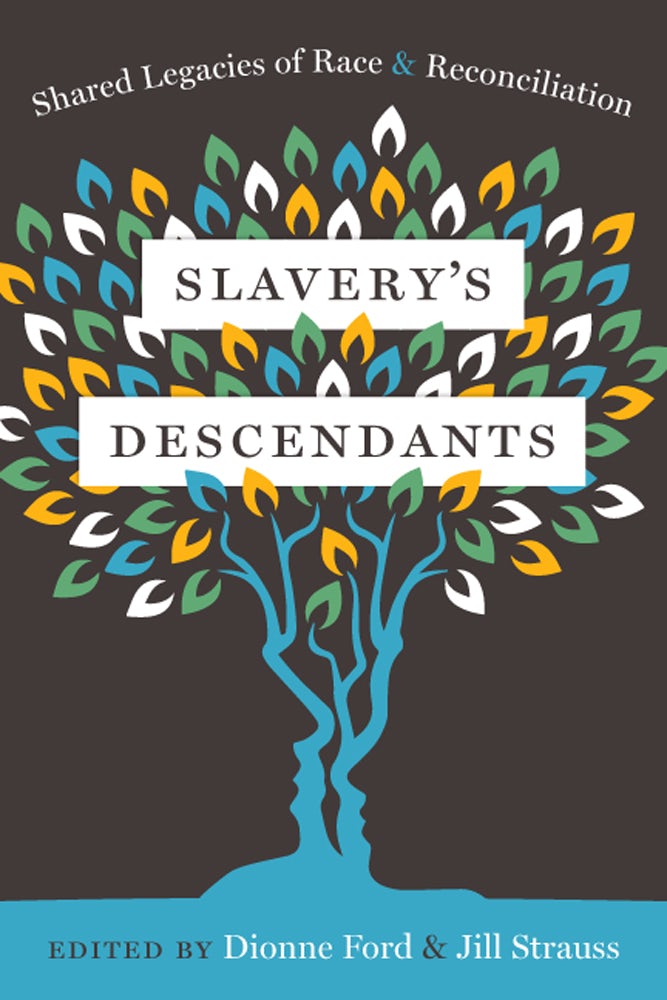
Slavery’s Descendants brings together contributors from a variety of racial backgrounds, all members or associates of a national racial reconciliation organization called Coming to the Table, to tell their stories of dealing with America’s racial past through their experiences and their family histories. Some are descendants of slaveholders, some are descendants of the enslaved, and many are descendants of both slaveholders and slaves. What they all have in common is a commitment toward collective introspection, and a willingness to think critically about how the nation’s histories of oppression continue to ripple into the present, affecting us all.
In this book, Antoinette contributed the chapter, “Stateline”, in the book. It described her journey about researching her family’s former enslaver who was her biological great-grandfather, and the subsequent meetings she had with his living descendants. Broussard wanted them to know her line existed; it wasn’t invisible.
 Antoinette Broussard